Graduation projects
Prosthetic Aesthetics of an Archive: The Architecture of Postlandscape
Project description
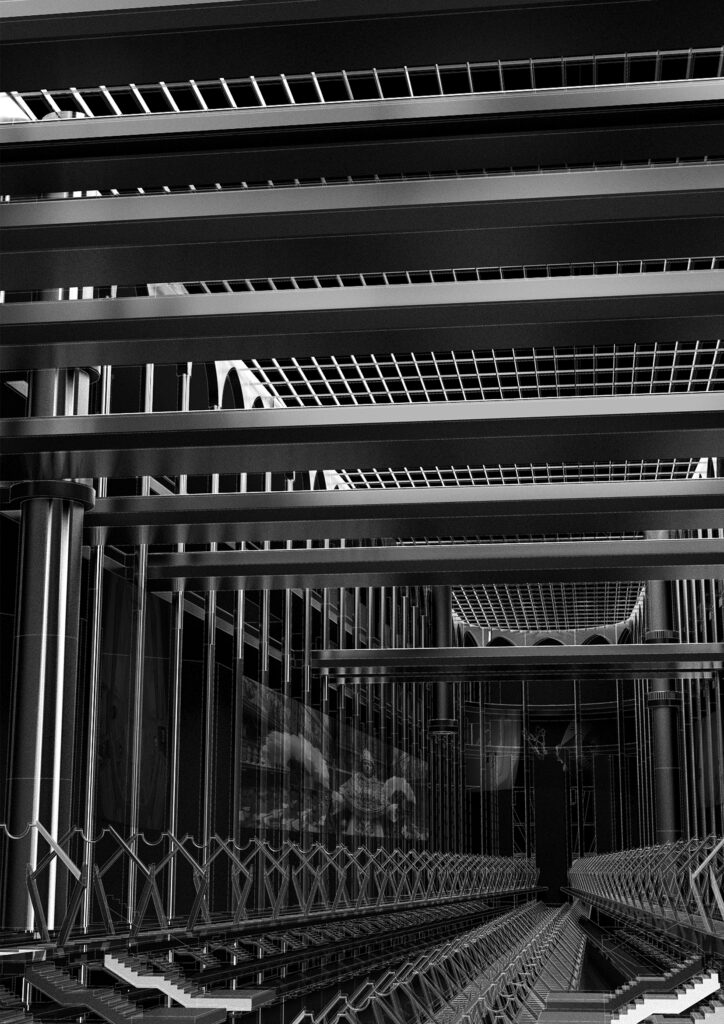
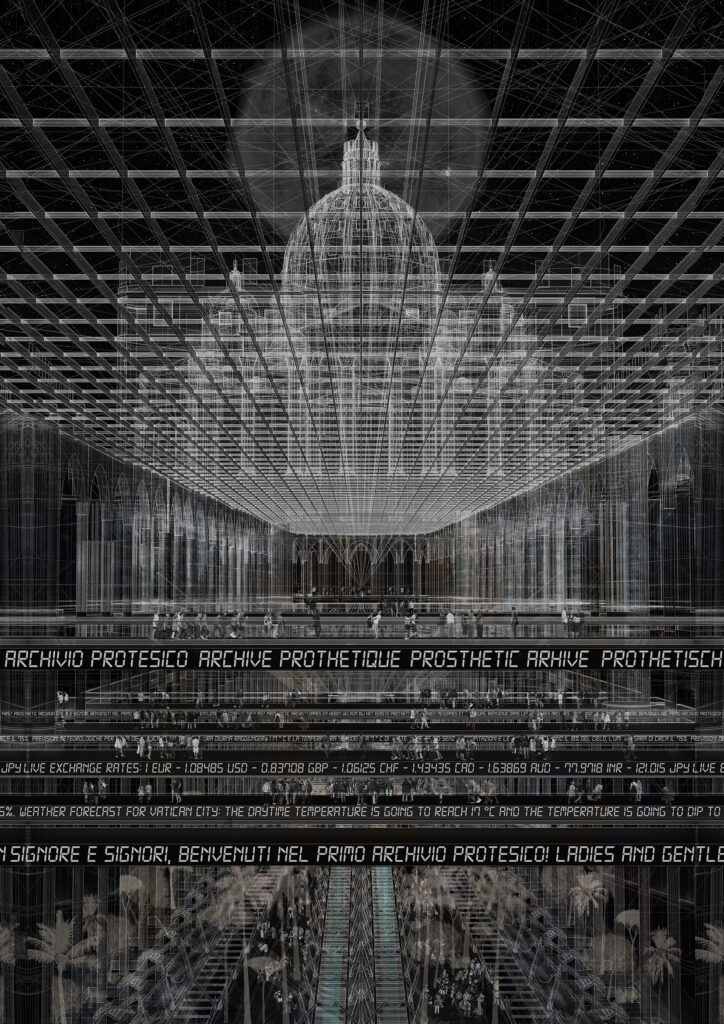
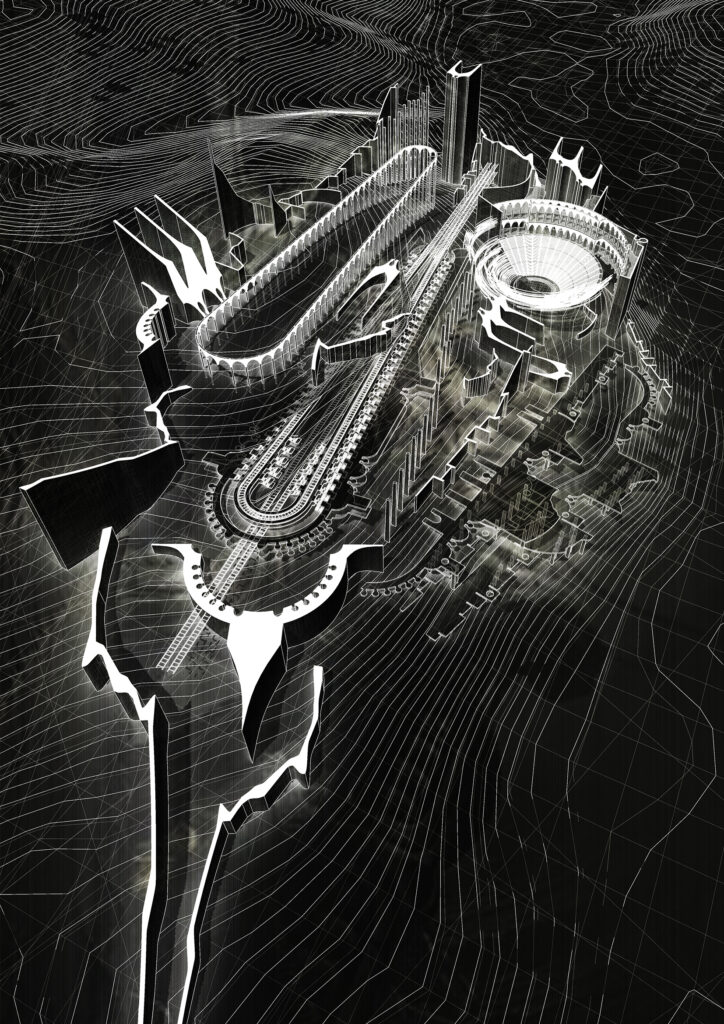
"Il cinema è l'arma più forte” or “cinema is the most powerful weapon” was the slogan under which Benito Mussolini and his son Vittorio founded film studio Cinecitta, the largest film studio in Europe at the time. Cinecitta or “European dream factory” was the film studio located in the suburbs of the city of Rome. The purpose of Cinecitta was to support the recovering Italian film industry, but unfortunately, the film studio was mainly used to make propaganda movies for Mussolini’s fascist regime. From Mussolini’s inauguration, through the refugee camp during the Second World War, to the museum and amusement park which is located on that territory today, Cinecitta with its spatial characteristics fulfilled the conditions of various architectural programs. Even then, it turned out that the spatial framework of the film studio can support various architectural programs. Since the topic of this research is Cinecitta 2.0, this research questions the characteristics and possibilities of a film studio as an architectural program today. Today, under the influence of technology and the development of a film as a form of mass media, the film studio as an architectural program loses its distinctive architectural form and function. The technological expansion of tools by which movie is made has created a completely new working ecology, which does not require the spatial characteristics of the film studio known so far. In this regard, the film studio of today is redirecting its architectural function in relation to the technological phenomena of today. The contemporary film studio is no longer concerned with the issue of movie-making but rather deals with the problem of archiving the film and its content.This project aims to propose the new form of an archive – the prosthetic archive that examines the problems of the archive of the past, the archive as we understand it today, both in its theoretical position and in its architectural form. The prosthetic archive is a technology, a principle, an experimental methodological approach that can be used to improve a large number of archives. The prosthetic archive is a model, a scheme that in this project is presented in two positions, two situations, two contexts - the Vatican which is the archetype of the archive and Avala film, Košutnjak which is an abandoned film studio in Belgrade.
Author's presentation text
Đorđe Bulajić (M.Arch) was born in 1995 in Belgrade, he is a PhD candidate at the Faculty of Architecture, University of Belgrade, where he completed the Bachelor (2017) and Master studies of Architecture (2019). Since 2017, he has been participating as a teaching associate within the Bachelor, Integrated, and Master studies at the Department of Architecture, at the same faculty. He is currently engaged as a research assistant on a collaborative project between the Faculty of Architecture, University of Belgrade, and ETH Zurich DARCH Chair of Architecture and Territorial Planning.