Graduation projects
Ecological corridors in Timișoara Growth Pole. Good practice

Project description
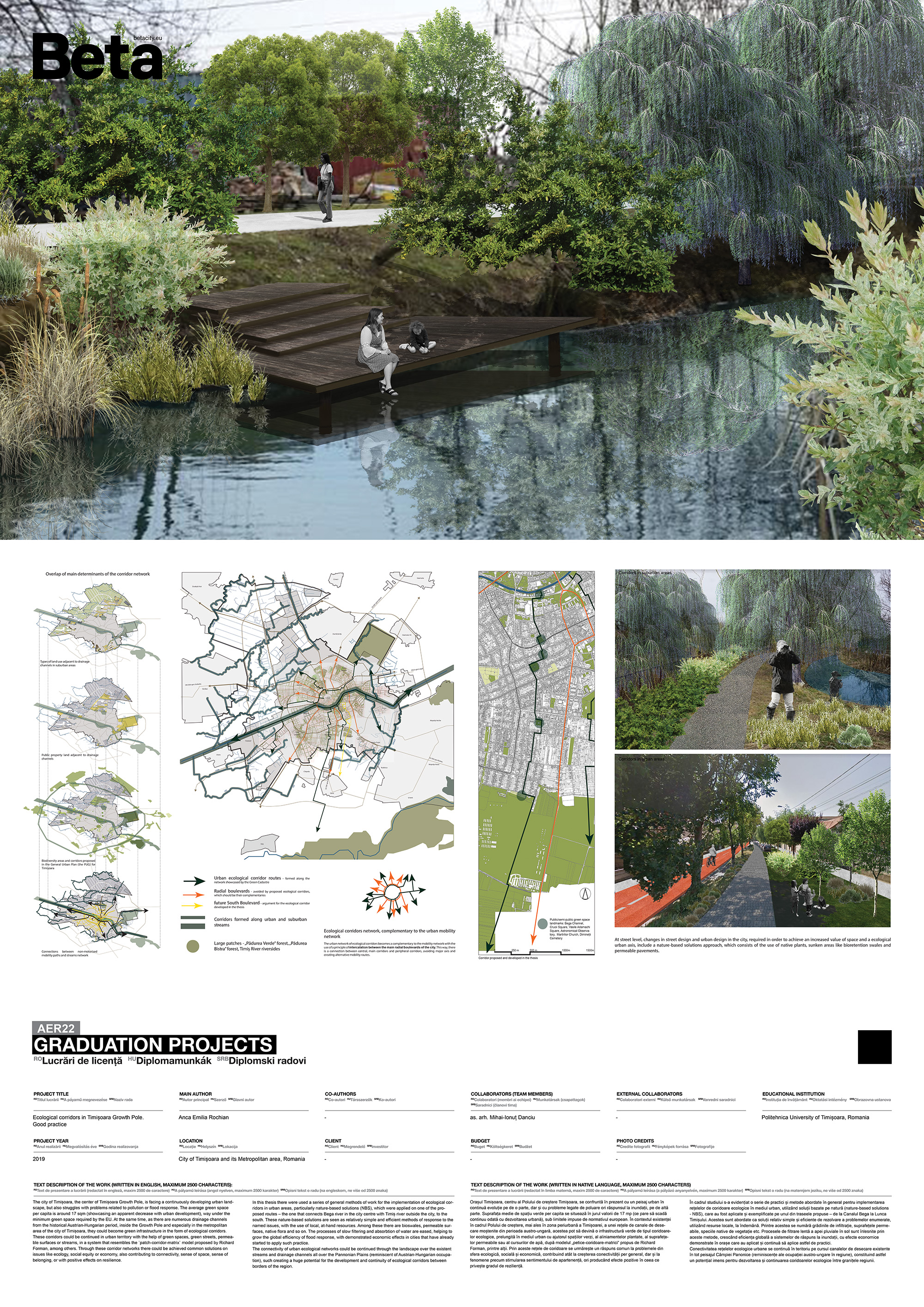
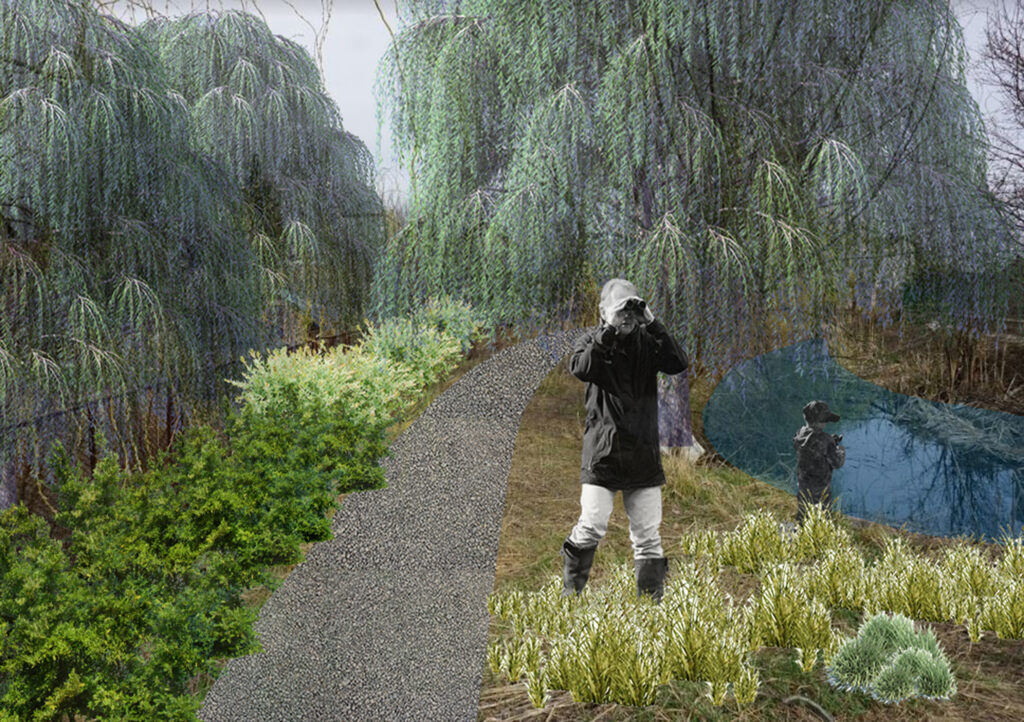
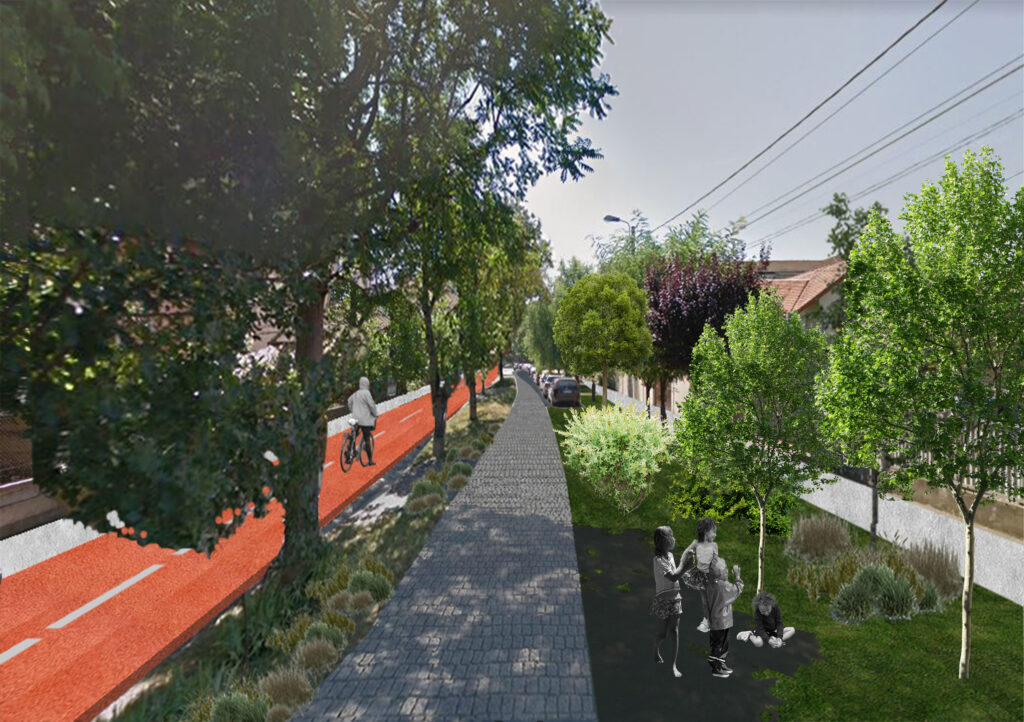
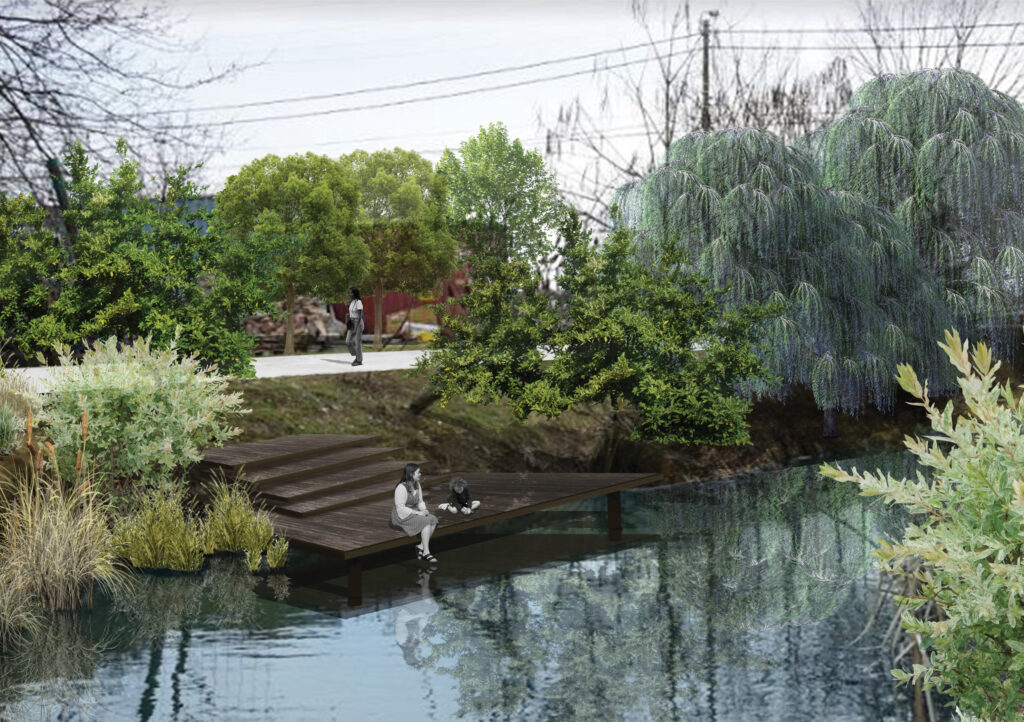
The city of Timișoara, the center of Timișoara Growth Pole, is facing a continuously developing urban landscape, but also struggles with problems related to pollution or flood response. The average green space per capita is around 17 sqm (showcasing an apparent decrease with urban development), way under the minimum green space required by the EU. At the same time, as there are numerous drainage channels from the Austrian-Hungarian historical period of occupation, inside the Growth Pole and especially in the metropolitan area of the city of Timișoara, they could become green infrastructure in the form of ecological corridors. These corridors could be continued in urban territory with the help of green spaces, green streets, permeable surfaces or streams, in a system that resembles the `patch-corridor-matrix` model proposed by Richard Forman, among others. Through these corridor networks there could be achieved common solutions on issues like ecology, social equity or economy, also contributing to connectivity, sense of space, sense of belonging, or with positive effects on resilience. In this thesis there were used a series of general methods of work for the implementation of ecological corridors in urban areas, particularly nature-based solutions (NBS), which were applied on one of the proposed routes – the one that connects Bega river in the city centre with Timiș river outside the city, to the south. These nature-based solutions are seen as relatively simple and efficient methods of response to the named issues, with the use of local, at-hand resources. Among these there are bioswales, permeable surfaces, native flora and so on. The processes of slow filtering and absorbtion of water are eased, helping to grow the global efficiency of flood response, with demonstrated economic effects in cities that have already started to apply such practice. The connectivity of urban ecological networks could be continued through the landscape over the existent streams and drainage channels all over the Pannonian Plains (reminiscent of Austrian-Hungarian occupation), such creating a huge potential for the development and continuity of ecological corridors between borders of the region.
Author's presentation text
Anca Emilia Rochian graduated from the Architecture and Urban Planning Faculty of Politehnica University of Timișoara in 2019. She is passionate about her work, especially about those projects that give off best results with minimum resources, approach that she considers is needed for efficient design. Presently she is working in an architecture and urban planning studio, where she is involved in urban planning projects inside the Timișoara Growth Pole, thus having the opportunity to practice the strategies approached in her thesis. In the meantime, she participates as a contributor in Timișoara Verde-Albastră (Green-Blue Timișoara), a project that aims to promote among the community the less accessed urban green and leisure spaces, coming up with alternative ways of spending time in nature right in the city, but also raises awareness on simple and convenient ways of protecting the nature in the city, for the benefit of humans and nature itself.