Initiatives / Experiments / Visions
Etopia: Next Nature Architecture


Project description
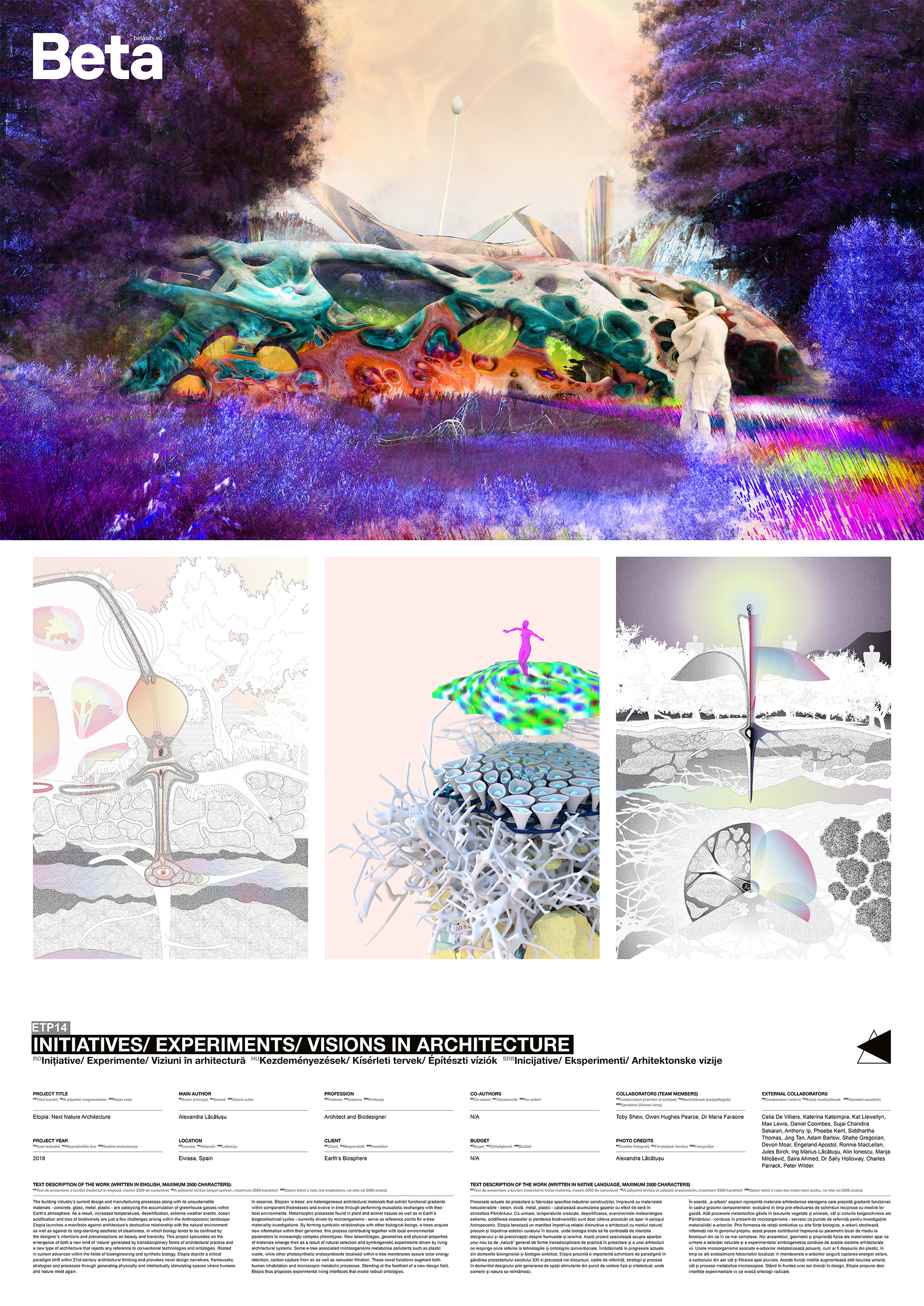
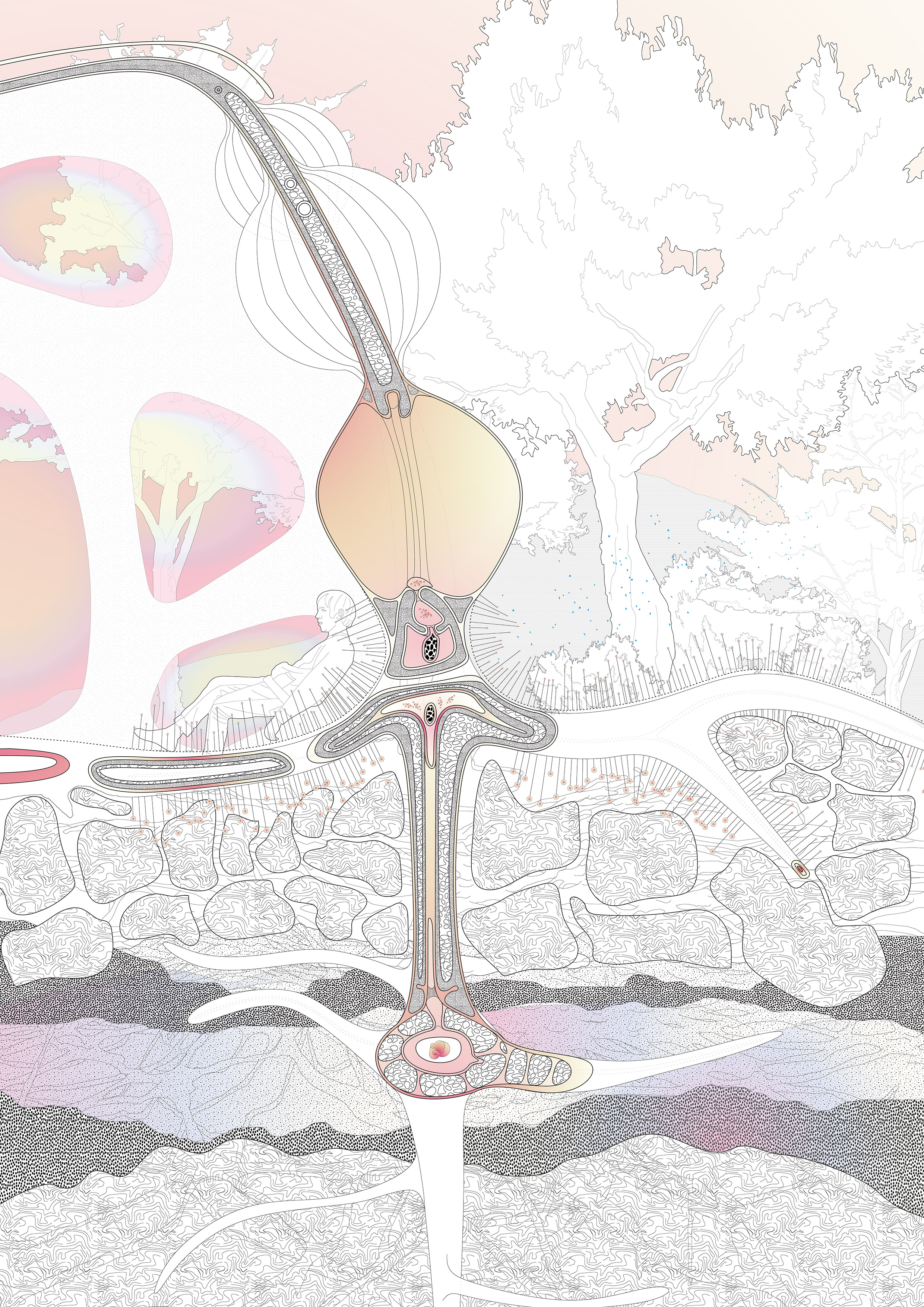
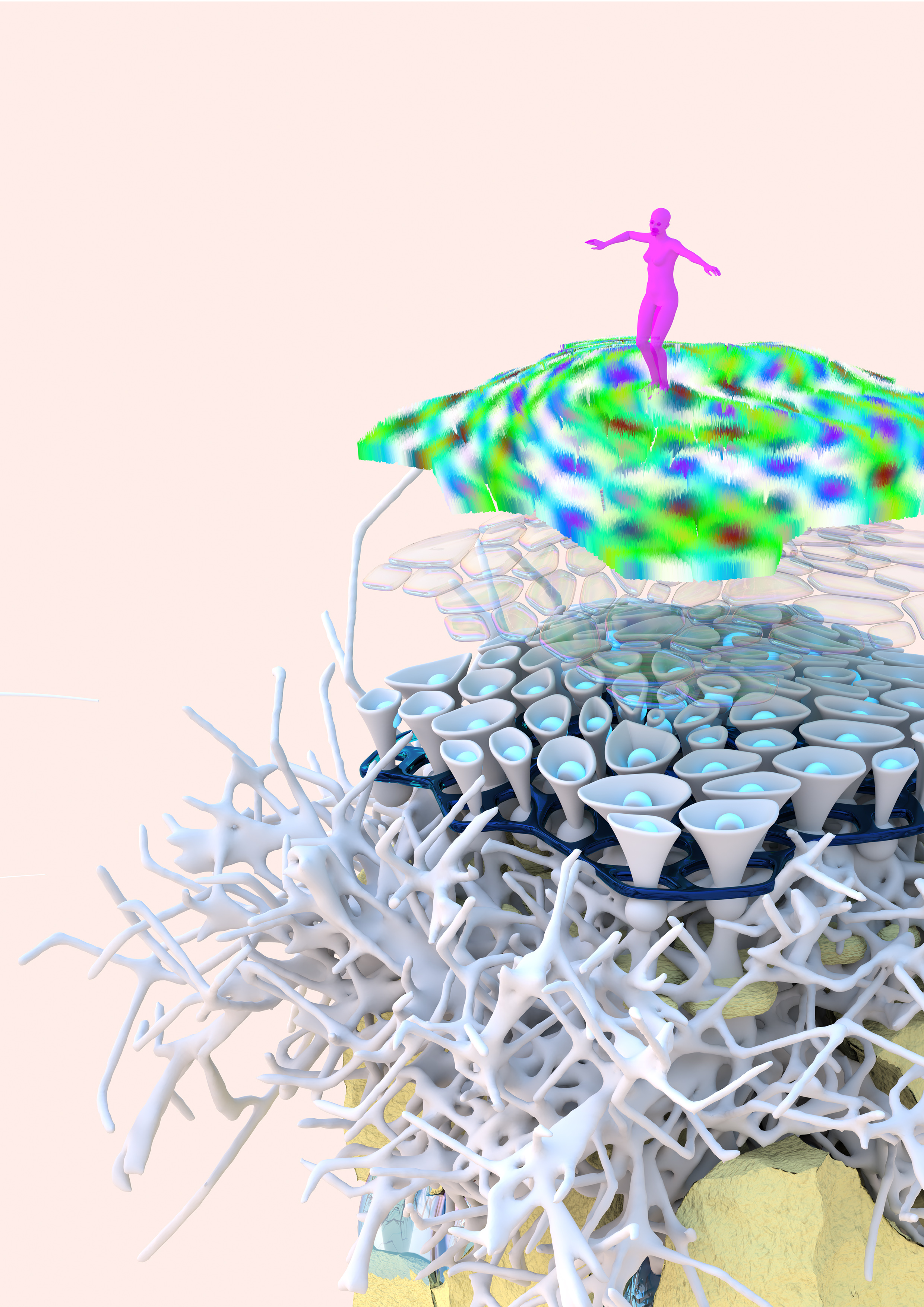
The building industry’s current design and manufacturing processes along with its unsustainable materials - concrete, glass, metal, plastic - are catalysing the accumulation of greenhouse gasses within Earth’s atmosphere. As a result, increased temperatures, desertification, extreme weather events, ocean acidification and loss of biodiversity are just a few challenges arising within the Anthropocenic landscape. Etopia launches a manifesto against architecture’s destructive relationship with the natural environment as well as against its long-standing aesthetic of cleanliness, in which biology tends to be confined by the designer’s intentions and preconceptions on beauty and hierarchy. This project speculates on the emergence of both a new kind of ‘nature’ generated by transdisciplinary forms of architectural practice and a new type of architecture that rejects any reference to conventional technologies and ontologies. Rooted in current advances within the fields of bioengineering and synthetic biology, Etopia depicts a critical paradigm shift within 21st-century architectural thinking and provokes novel design narratives, frameworks, strategies and processes through generating physically and intellectually stimulating spaces where humans and nature meet again.In essence, Etopian ‘e-trees’ are heterogeneous architectural materials that exhibit functional gradients within component thicknesses and evolve in time through performing mutualistic exchanges with their host environments. Metamorphic processes found in plant and animal tissues as well as in Earth’s biogeochemical cycles - currently driven by microorganisms - serve as reference points for e-tree materiality investigations. By forming symbiotic relationships with other biological beings, e-trees acquire new information within their genomes, this process contributing together with local environmental parameters to increasingly complex phenotypes. New assemblages, geometries and physical properties of materials emerge then as a result of natural selection and symbiogenetic experiments driven by living architectural systems. Some e-tree associated microorganisms metabolise pollutants such as plastic waste, while other photosynthetic endosymbionts localised within e-tree membranes assure solar energy retention, carbon capture from the air as well as rainwater filtration. These novel functions augment both human inhabitation and microscopic metabolic processes. Standing at the forefront of a new design field, Etopia thus proposes experimental living interfaces that evoke radical ontologies.
Author's presentation text
Alexandra Lacatusu is an award-winning architectural designer and researcher whose life goal is to find sustainable ways of reducing the negative impacts of the building industry on the natural environment. Operating at the intersection between bio-integrated design and bio-digital fabrication, Alexandra’s focus is on growing building materials that foster biodiversity within urban environments. While studying at the Oxford School of Architecture, Alexandra specialised in both sustainable and digital design, experiences which have contributed to the development of her speculative research approach as well as her passion for growing architecture. Her work has won multiple awards and honours, was featured in various UK based publications as well as in Igloo Romania and travelled around the world as part of the RIBA President's Medals Exhibition. Today, Alexandra is caring out research into bio-receptivity and biomaterials within the Bio-ID Lab at the Bartlett School of Architecture in London.