Graduation projects
Fernández y Roche Hat Factory


Project description
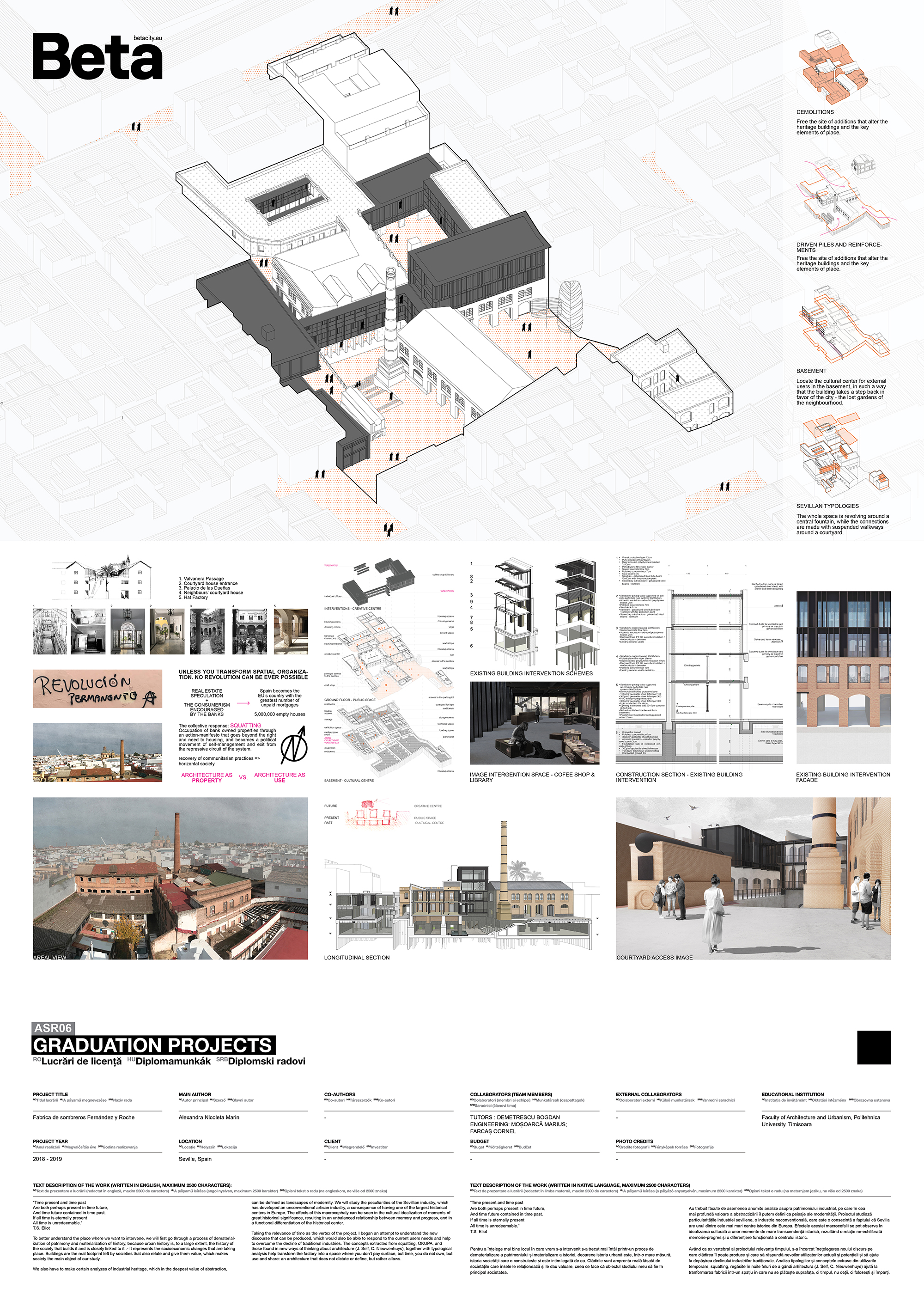
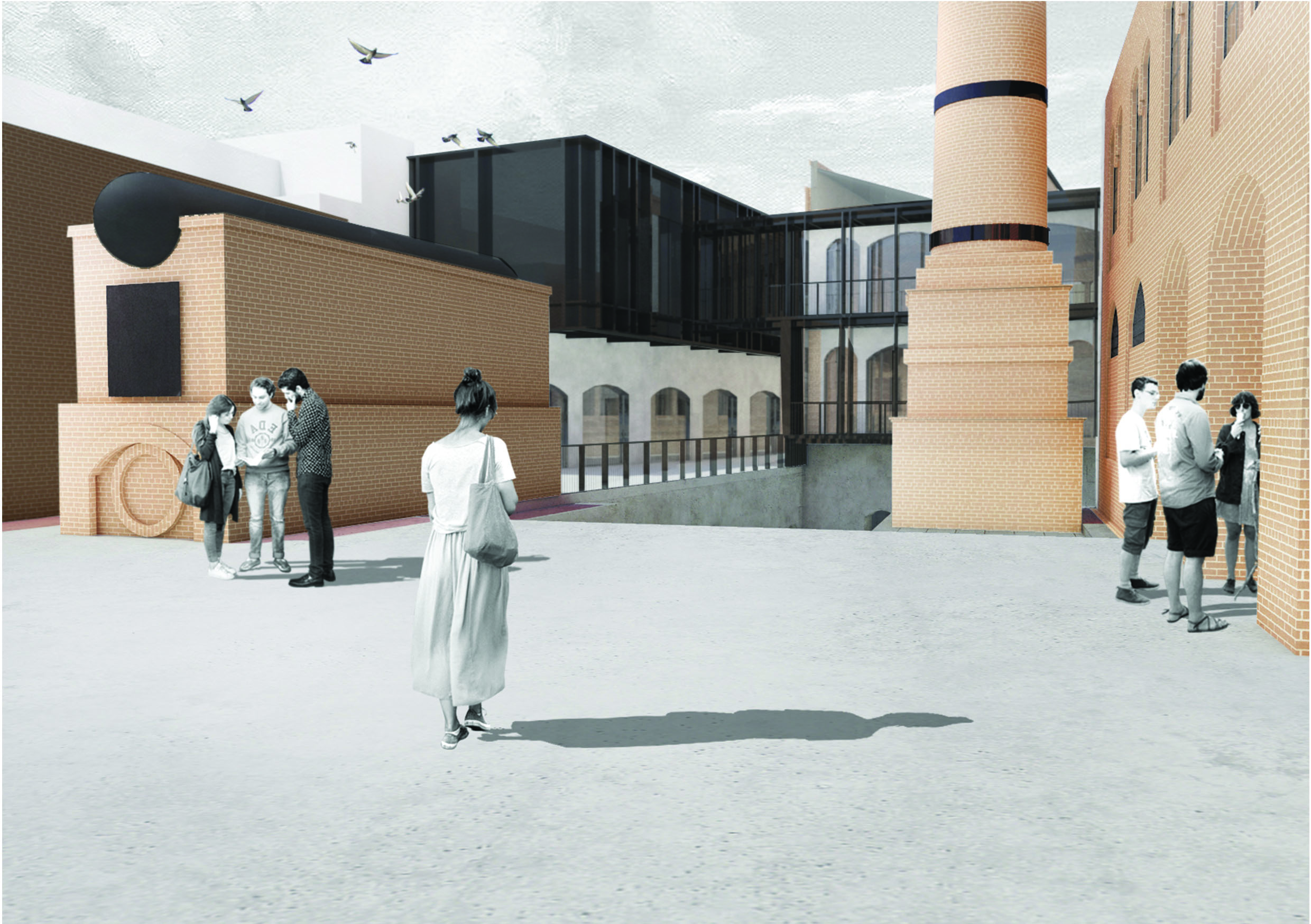
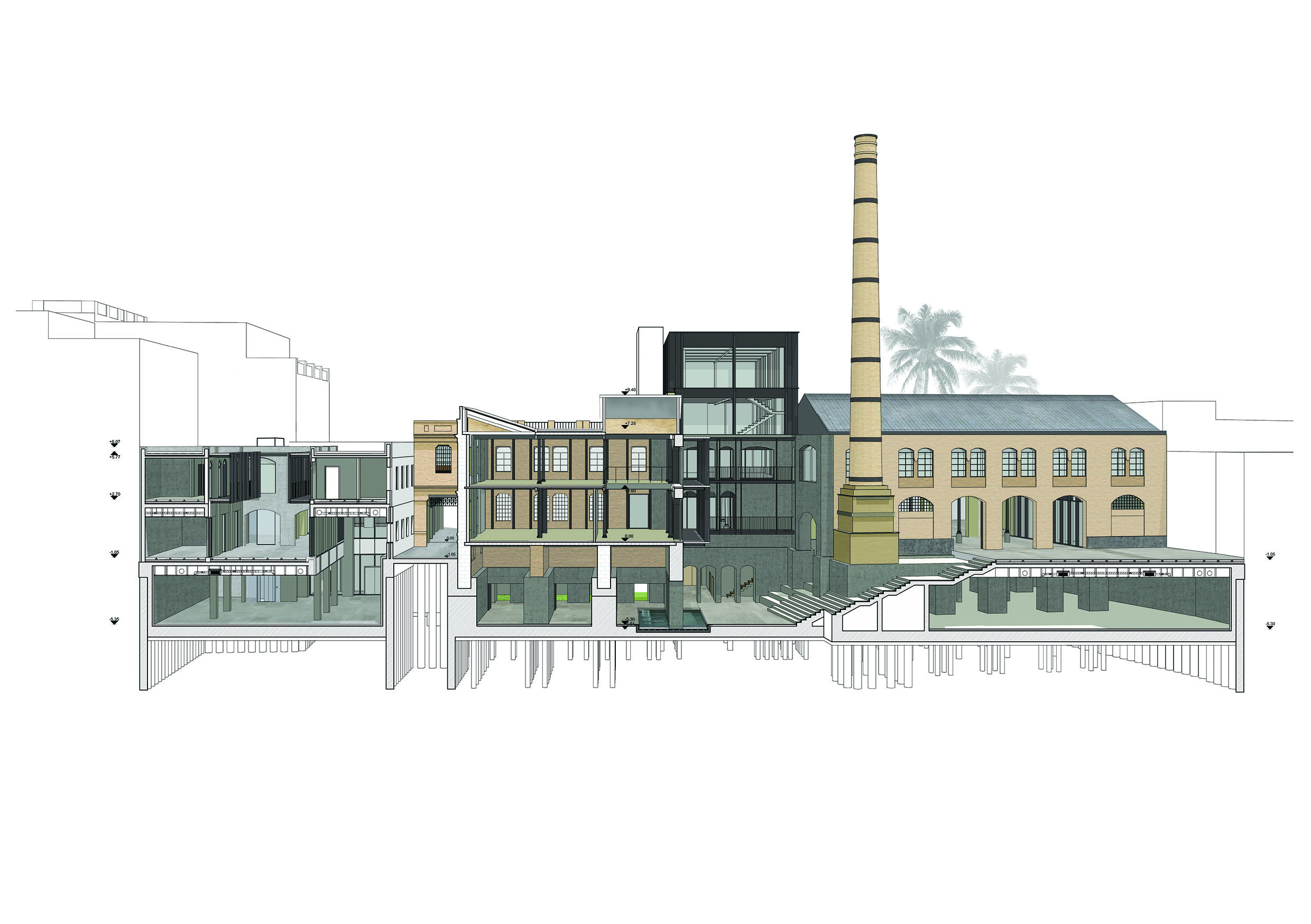
“Time present and time past Are both perhaps present in time future, And time future contained in time past. If all time is eternally present All time is unredeemable.“ T.S. EliotTo better understand the place where we want to intervene, we will first go through a process of dematerialization of patrimony and materialization of history, because urban history is, to a large extent, the history of the society that builds it and is closely linked to it .- It represents the socioeconomic changes that are taking place. Buildings are the real footprint left by societies that also relate and give them value, which makes society the main object of our study.We also have to make certain analyzes of industrial heritage, which in the deepest value of abstraction, can be defined as landscapes of modernity. We will study the peculiarities of the Sevillian industry, which has developed an unconventional artisan industry, a consequence of having one of the largest historical centers in Europe. The effects of this macrocephaly can be seen in the cultural idealization of moments of great historical significance, resulting in an unbalanced relationship between memory and progress, and in a functional differentiation of the historical center.Taking the relevance of time as the vertex of the project, I began an attempt to understand the new discourse that can be produced, which would also be able to respond to the current users needs and help to overcome the decline of traditional industries. The concepts extracted from squatting, OKUPA, and those found in new ways of thinking about architecture (J. Self, C. Nieuwenhuys), together with typological analysis help transform the factory into a space where you don’t pay surface, but time, you do not own, but use and share: an architecture that does not dictate or define, but rather allows.
Author's presentation text
She is in a continuous search for what contemporary architecture means, understood as a process of balance between memory and progress, and which, above the aesthetic side, must respond to the new complex issues with which society is confronted.