Initiatives / Experiments / Visions
The Enchanted Gardens of Ada Kaleh


Project description
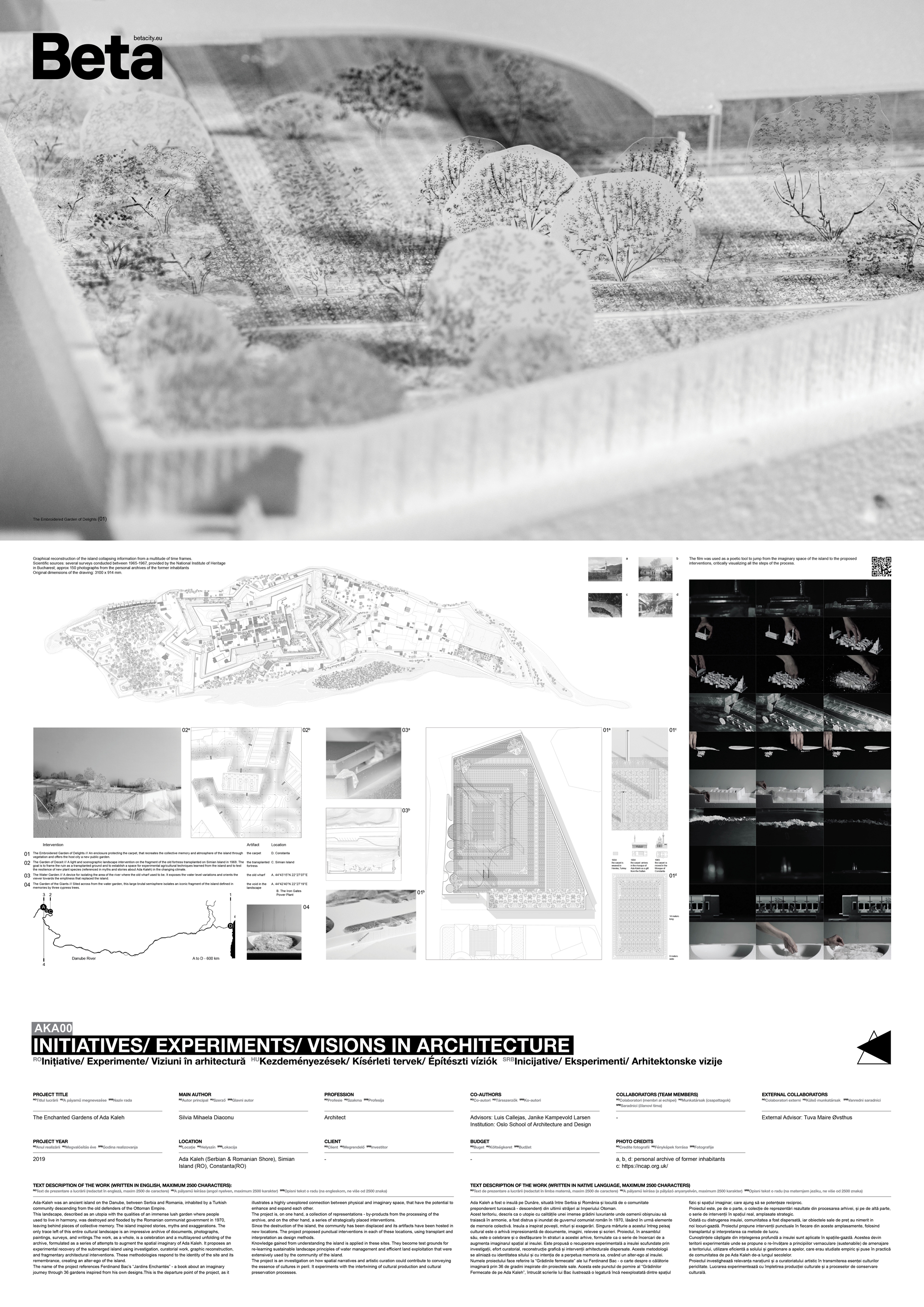
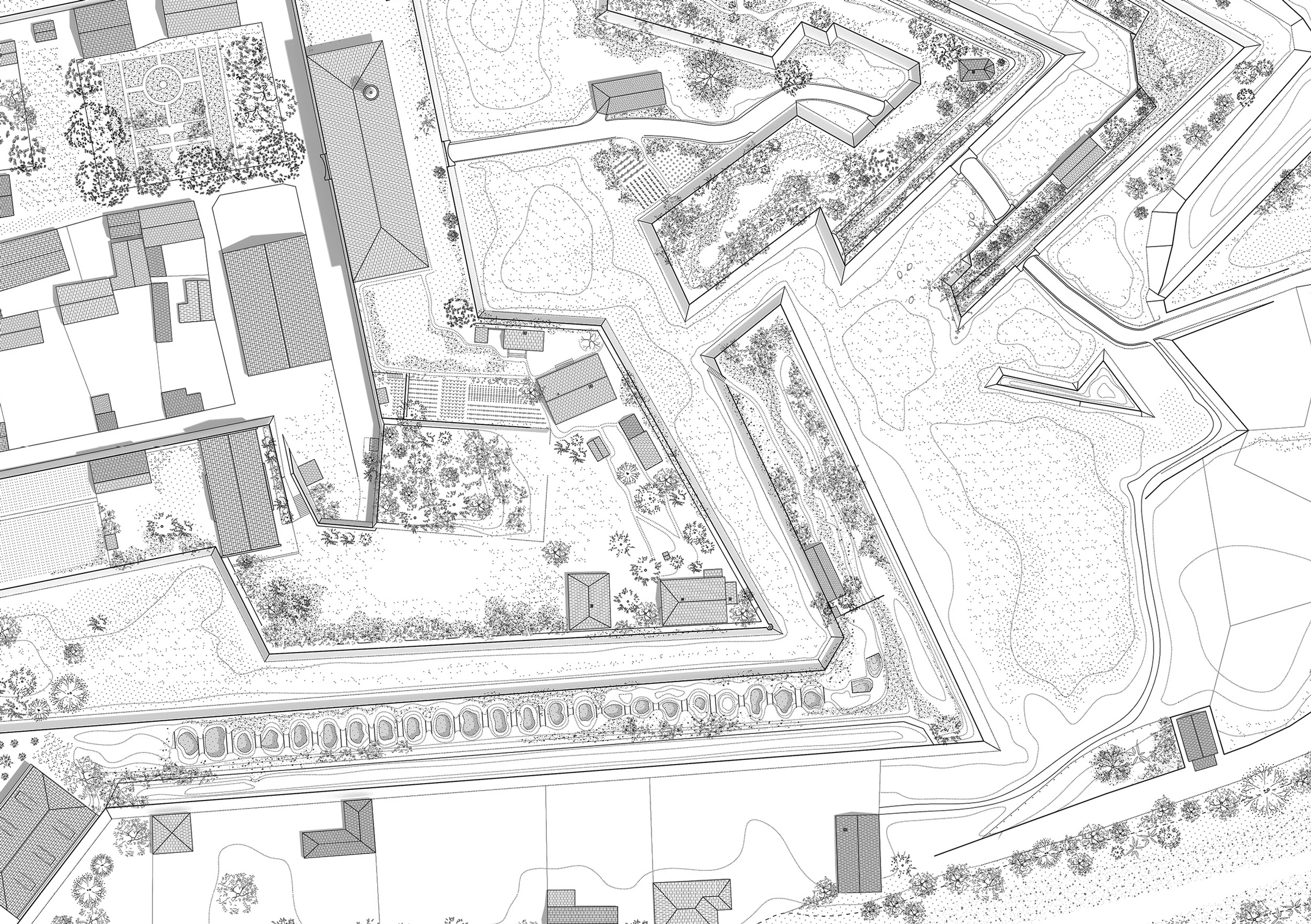
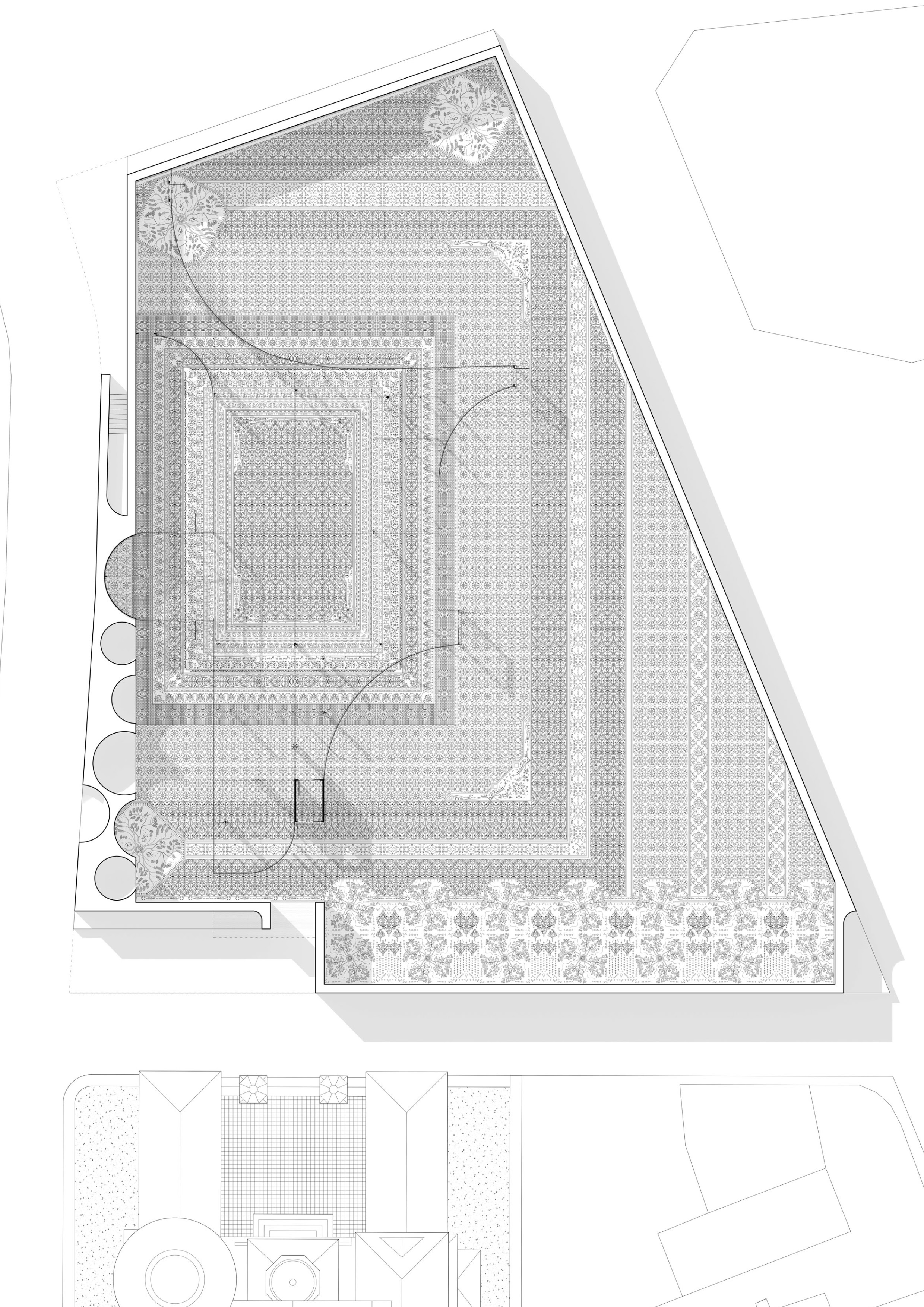
Ada-Kaleh was an ancient island on the Danube, between Serbia and Romania, inhabited by a Turkish community descending from the old defenders of the Ottoman Empire. This landscape, described as an utopia with the qualities of an immense lush garden where people used to live in harmony, was destroyed and flooded by the Romanian communist government in 1970, leaving behind pieces of collective memory. The island inspired stories, myths and exaggerations. The only trace left of this entire cultural landscape is an impressive archive of documents, photographs, paintings, surveys, and writings.The work, as a whole, is a celebration and a multilayered unfolding of the archive, formulated as a series of attempts to augment the spatial imaginary of Ada Kaleh. It proposes an experimental recovery of the submerged island using investigation, curatorial work, graphic reconstruction, and fragmentary architectural interventions. These methodologies respond to the identity of the site and its remembrance, creating an alter-ego of the island. The name of the project references Ferdinand Bac’s “Jardins Enchantés” - a book about an imaginary journey through 36 gardens inspired from his own designs.This is the departure point of the project, as it illustrates a highly unexplored connection between physical and imaginary space, that have the potential to enhance and expand each other. The project is, on one hand, a collection of representations - by-products from the processing of the archive, and on the other hand, a series of strategically placed interventions. Since the destruction of the island, the community has been displaced and its artifacts have been hosted in new locations. The project proposed punctual interventions in each of these locations, using transplant and interpretation as design methods. Knowledge gained from understanding the island is applied in these sites. They become test grounds for re-learning sustainable landscape principles of water management and efficient land exploitation that were extensively used by the community of the island. The project is an investigation on how spatial narratives and artistic curation could contribute to conveying the essence of cultures in peril. It experiments with the intertwining of cultural production and cultural preservation processes.
Author's presentation text
Silvia Diaconu graduated from Ion Mincu University of Architecture and Urban Planning and gained experience in international environments, working in Denmark and the Netherlands, and in Bucharest, working for a local office and engaging in independent projects. She had the opportunity to work in the film industry, as an assistant art director for almost a year. Afterwards, Silvia pursued a second Master at the Oslo School of Architecture and Design, where she developed an interest towards interdisciplinary approaches, interconnectivity, and the relationship between art, architecture and landscape, under the guidance of Luis Callejas. During the master, she had notable results in the field of landscape architecture, and she received a series of distinctions, including two RIBA President's Medals nominations. After graduation, she started to collaborate on various projects and competitions in Romania and abroad.