Graduation projects
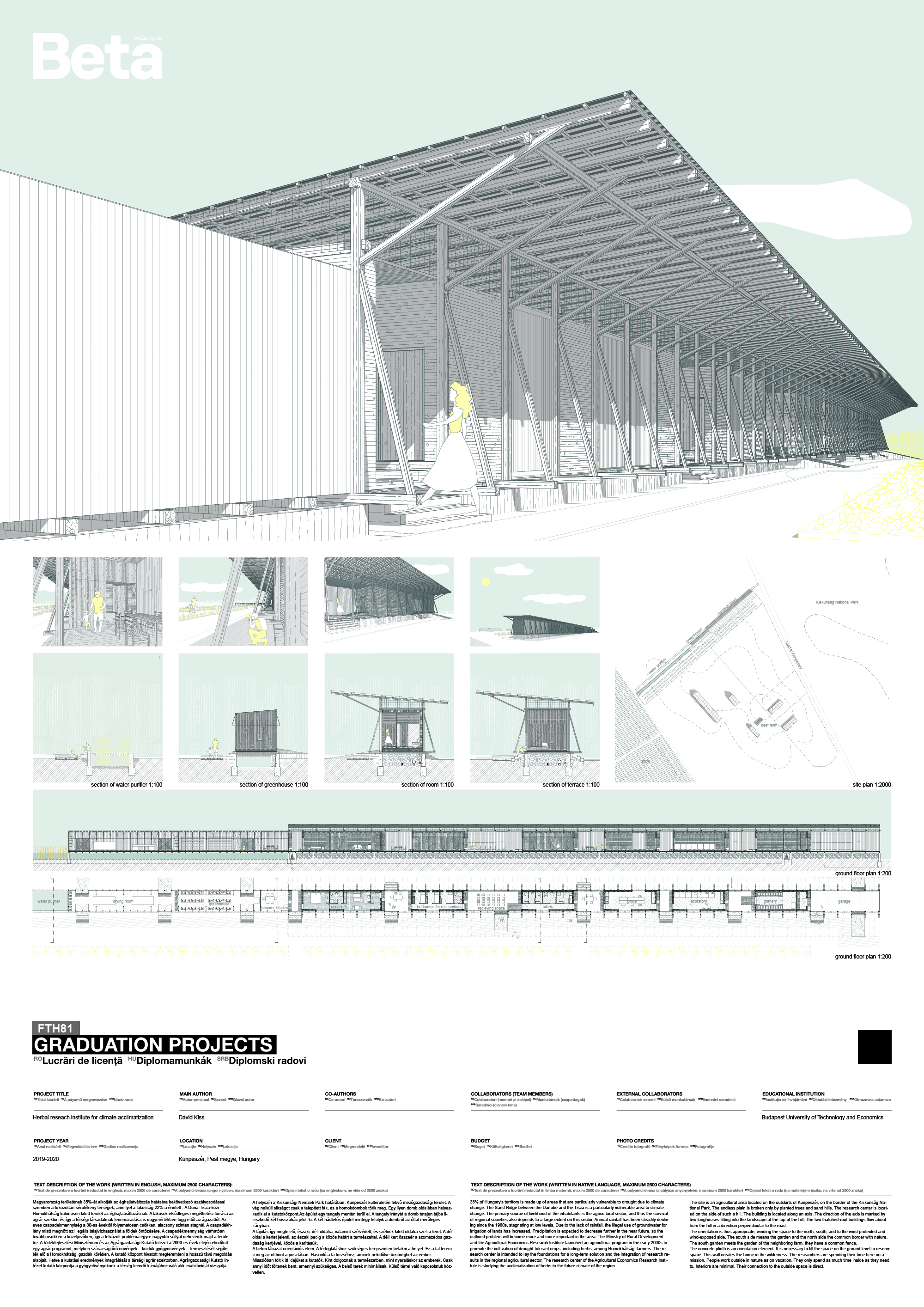
Herbal reseach institute for climate acclimatization

Project description
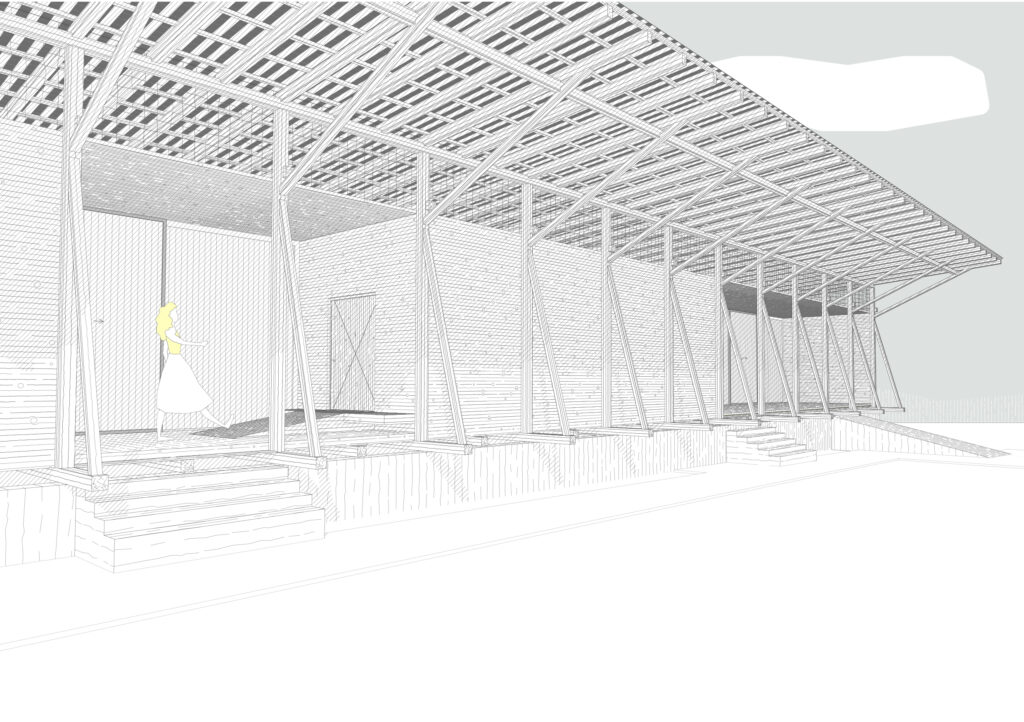
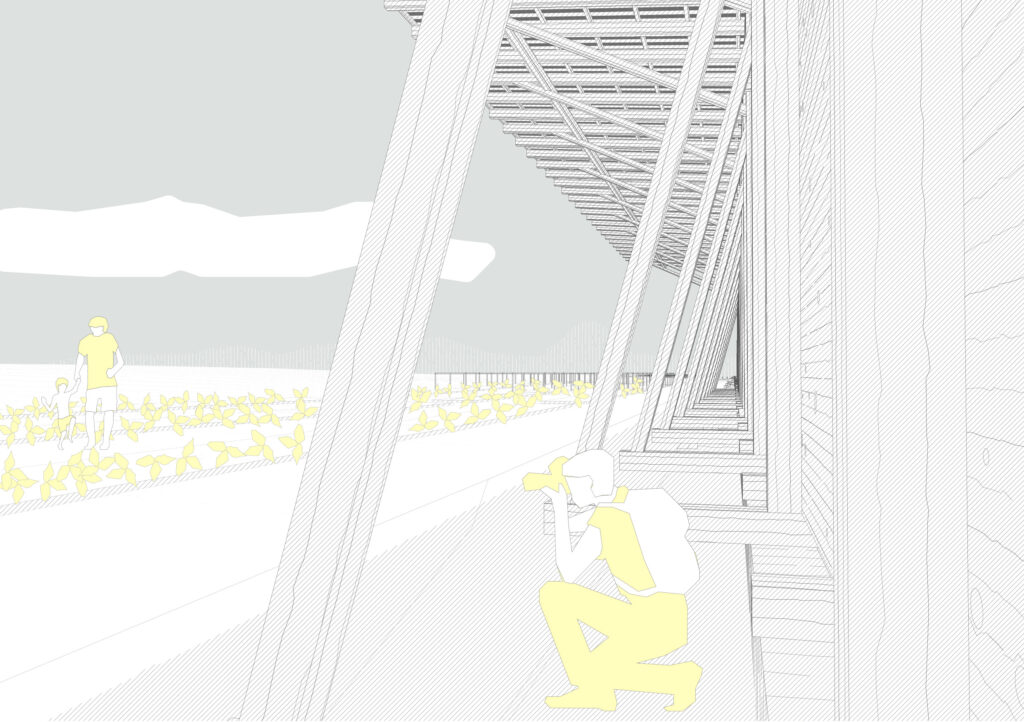
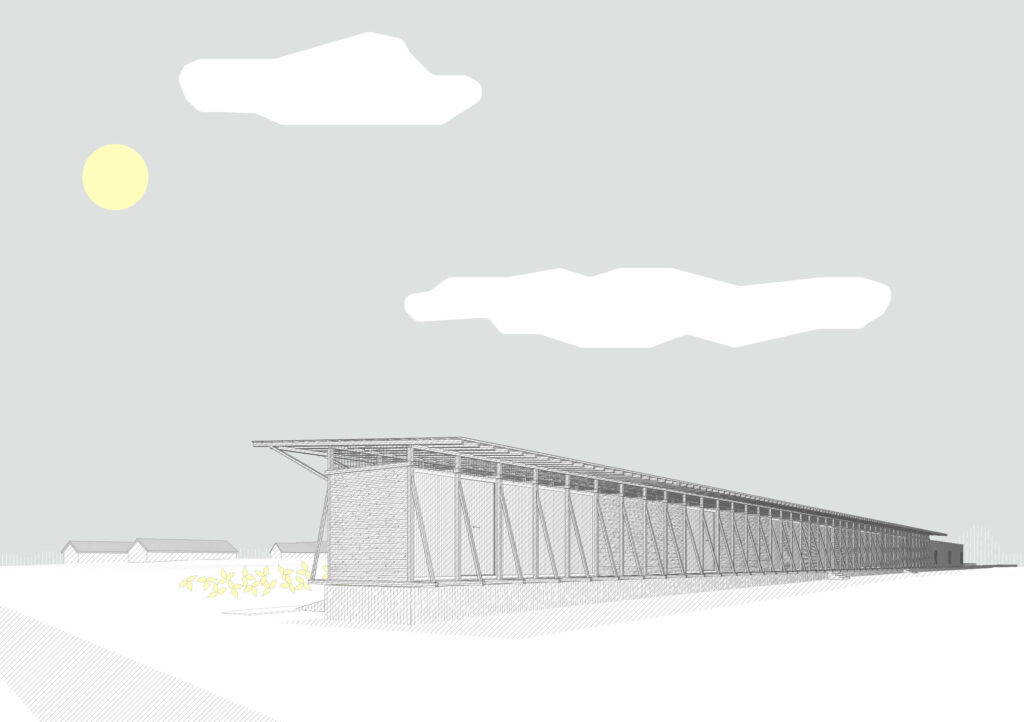
35% of Hungary's territory is made up of areas that are particularly vulnerable to drought due to climate change. The Sand Ridge between the Danube and the Tisza is a particularly vulnerable area to climate change. The primary source of livelihood of the inhabitants is the agricultural sector, and thus the survival of regional societies also depends to a large extent on this sector. Annual rainfall has been steadily declining since the 1980s, stagnating at low levels. Due to the lack of rainfall, the illegal use of groundwater for irrigation of lands has increased. Precipitation is expected to decrease further in the near future, so the outlined problem will become more and more important in the area. The Ministry of Rural Development and the Agricultural Economics Research Institute launched an agricultural program in the early 2000s to promote the cultivation of drought-tolerant crops, including herbs, among Homokhátsági farmers. The research center is intended to lay the foundations for a long-term solution and the integration of research results in the regional agricultural sector. The research center of the Agricultural Economics Research Institute is studying the acclimatization of herbs to the future climate of the region.The site is an agricultural area located on the outskirts of Kunpeszér, on the border of the Kiskunság National Park. The endless plain is broken only by planted trees and sand hills. The research center is located on the side of such a hill.The building is located along an axis. The direction of the axis is marked by two longhouses fitting into the landscape at the top of the hill. The two thatched-roof buildings flow about from the hill in a direction perpendicular to the road.The orientation is thus appropriate, winding the space to the north, south, and to the wind-protected and wind-exposed side. The south side means the garden and the north side the common border with nature. The south garden meets the garden of the neighboring farm, they have a common fence.The concrete plinth is an orientation element. It is necessary to fill the space on the ground level to reserve space. This wall creates the home in the wilderness. It is similar to the trunk of a tree on which one can sit.The researchers are spending their time here on a mission. People work outside in nature as on vacation. They only spend as much time inside as they need to. Interiors are minimal. Their connection to the outside space is direct.
Author's presentation text
I am Dávid Kiss, a graduate architect from the Budapest University of Technology. For me, architecture primarily carries moods, feelings, memories. As many details come together as a unit, and as soon as one fills it with life. I am currently working in an architectural firm, gaining professional experience so that I can more fully transfer my thoughts on architecture to my environment later on.