Public space
HIGH WAY - MY WAY
Project description
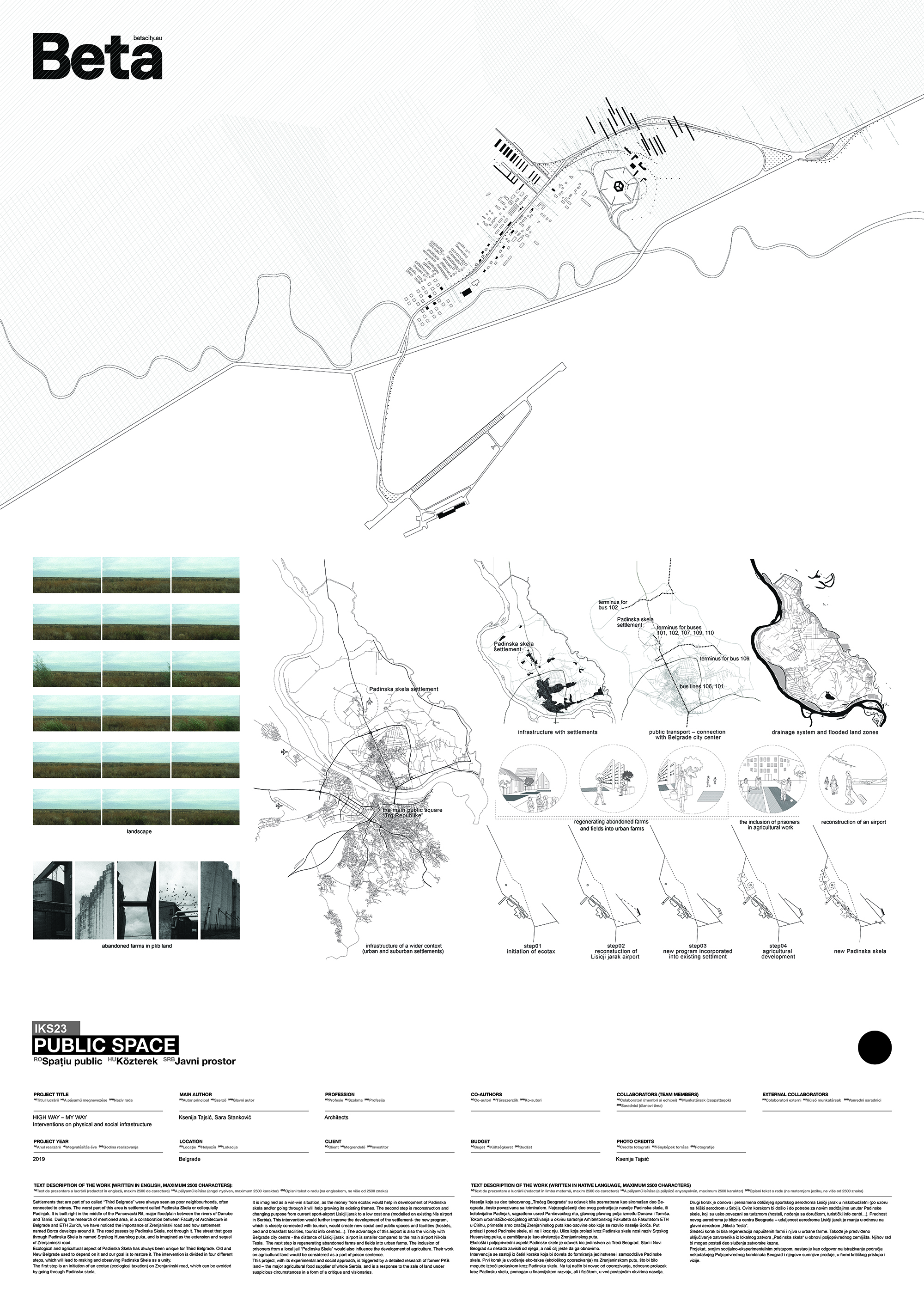
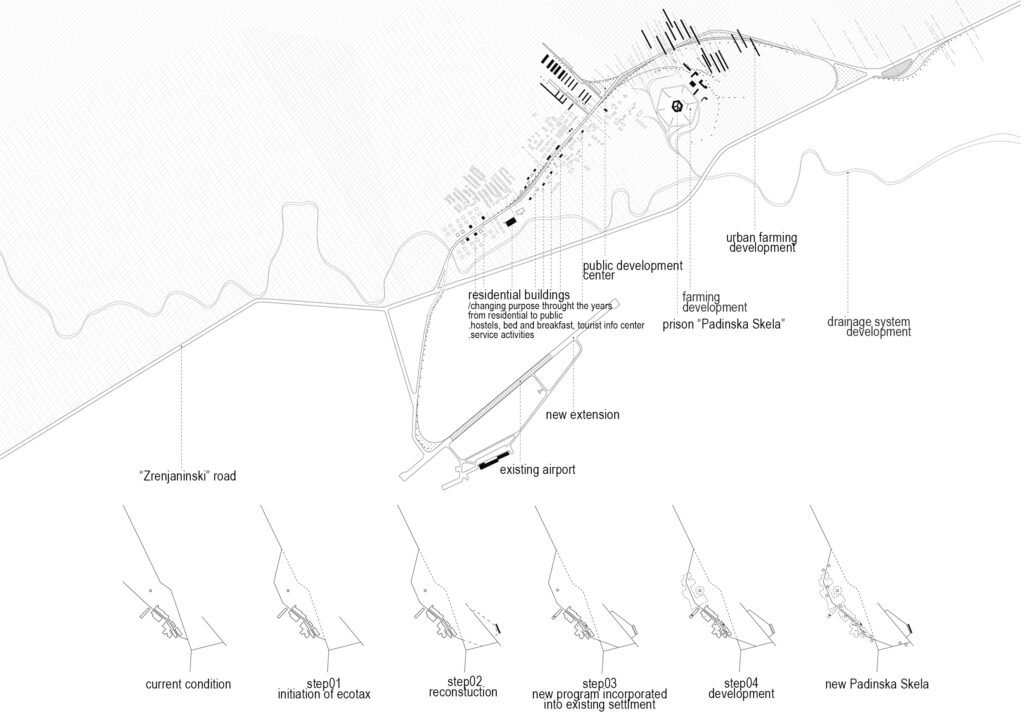
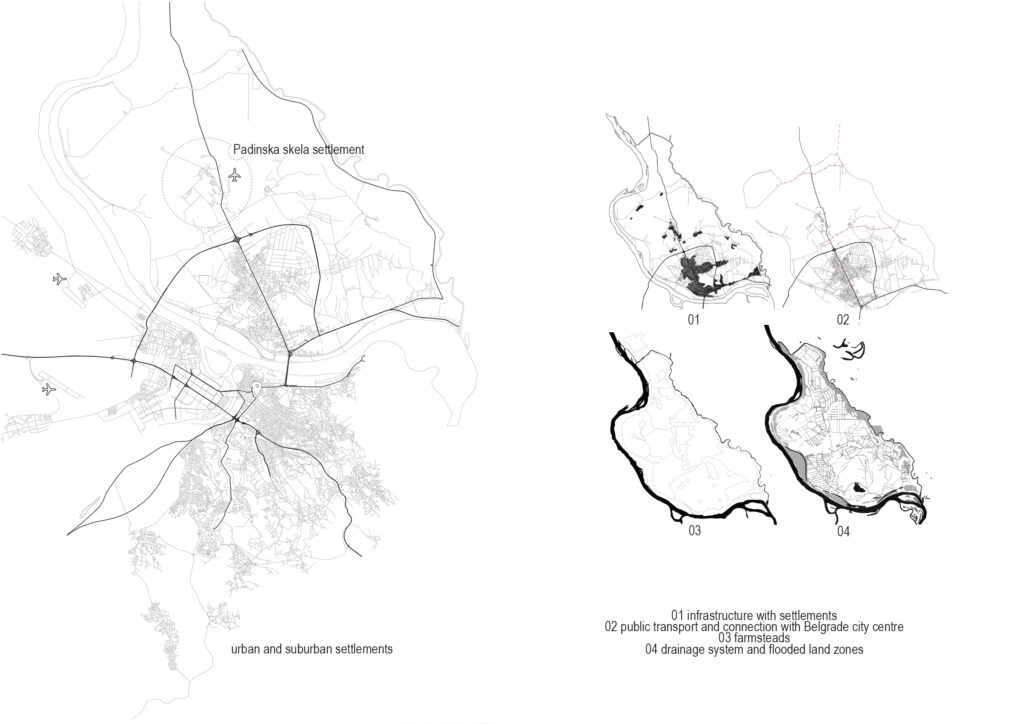
Settlements that are part of so called “Third Belgrade” were always seen as poor neighbourhoods, often connected to crimes. The worst part of this area is settlement called Padinska Skela or colloquially Padinjak. It is built right in the middle of the Pancevacki Rit, major floodplain between the rivers of Danube and Tamis.During the research of mentioned area, in a collaboration between Faculty of Architecture in Belgrade and ETH Zurich, we have noticed the importance of Zrenjaninski road and how settlement named Borca develops around it. The road passes by Padinska Skela, not through it. The street that goes through Padinska Skela is named Srpskog Husarskog puka, and is imagined as the extension and sequel of Zrenjaninski road. Ecological and agricultural aspect of Padinska Skela has always been unique for Third Belgrade. Old and New Belgrade used to depend on it and our goal is to restore it. The intervention is divided in four different steps, which will lead to making and observing Padinska Skela as a unity.The first step is an initiation of an ecotax (ecological taxation) on Zrenjaninski road, which can be avoided by going through Padinska skela. It is imagined as a win-win situation, as the money from ecotax would help in development of Padinska skela and/or going through it will help growing its existing frames. The second step is reconstruction and changing purpose from current sport-airport Lisicji jarak to a low cost one (modelled on existing Nis airport in Serbia). This intervention would further improve the development of the settlement- the new program, which is closely connected with tourism, would create new social and public spaces and facilities (hostels, bed and breakfast facilities, tourist info centres...). The advantage of this airport is also the vicinity with Belgrade city centre - the distance of Lisicji jarak airport is smaller compared to the main airport Nikola Tesla. The next step is regenerating abandoned farms and fields into urban farms. The inclusion of prisoners from a local jail “Padinska Skela” would also influence the development of agriculture. Their work on agricultural land would be considered as a part of prison sentence. This project, with its experimental and social approach, is triggered by a detailed research of former PKB land – the major agricultural food supplier of whole Serbia, and is a response to the sale of land under suspicious circumstances in a form of a critique and visionaries.
Author's presentation text
In 2015, Sara and Ksenija enrolled in undergraduate studies, and in 2018, master's studies in architecture in Belgrade. During their studies, they participate in various workshops. They exhibited their works at the annual exhibitions of selected student works at the Faculty of Architecture and the Museum of Applied Arts in Belgrade. Sara improved her architectural skills through professional internships in Serbia and India, and Ksenija in Serbia and Lebanon. Since 2019, Sara has been working as a student demonstrator on professional design subjects at the Faculty of Architecture in Belgrade, and in the same year Ksenija continued her studies at the Bauhaus University in Weimar - Department of Media Architecture, as a DAAD scholarship holder. Their joint work, projects and collaborations have fostered a similar sensibility and interest in similar topics in architecture and life.