Graduation projects
TETH-Technological transformation hub


Project description
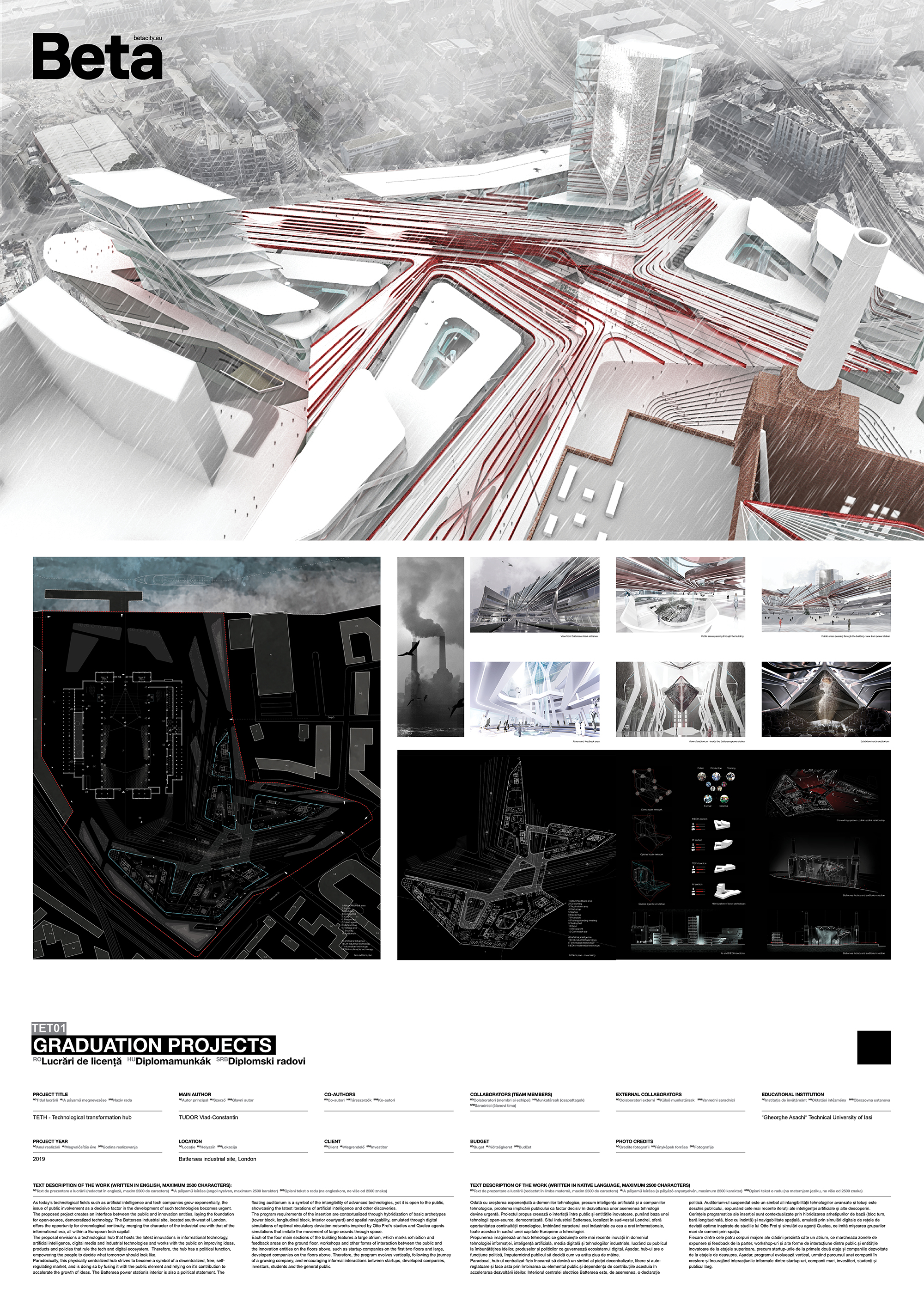
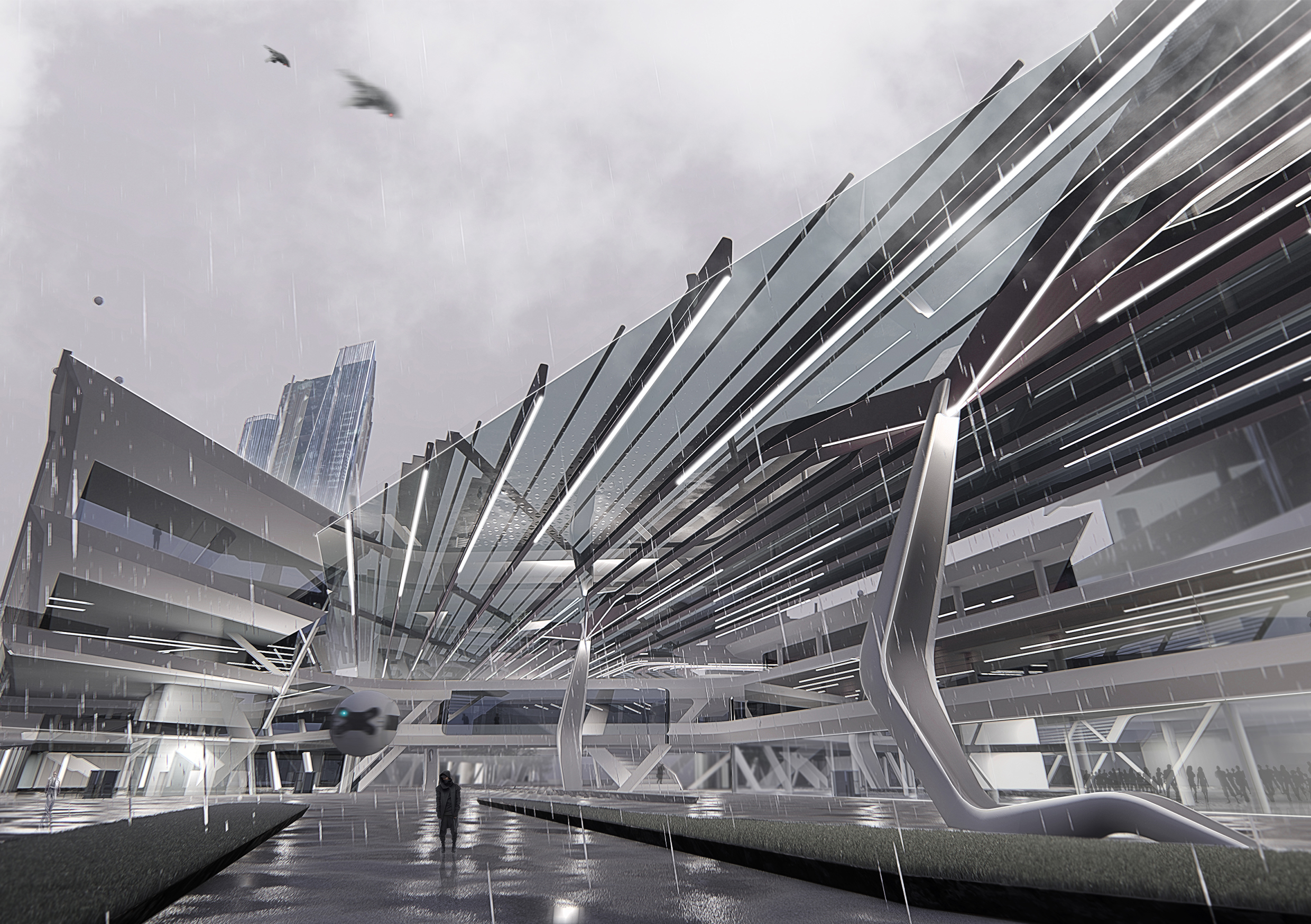
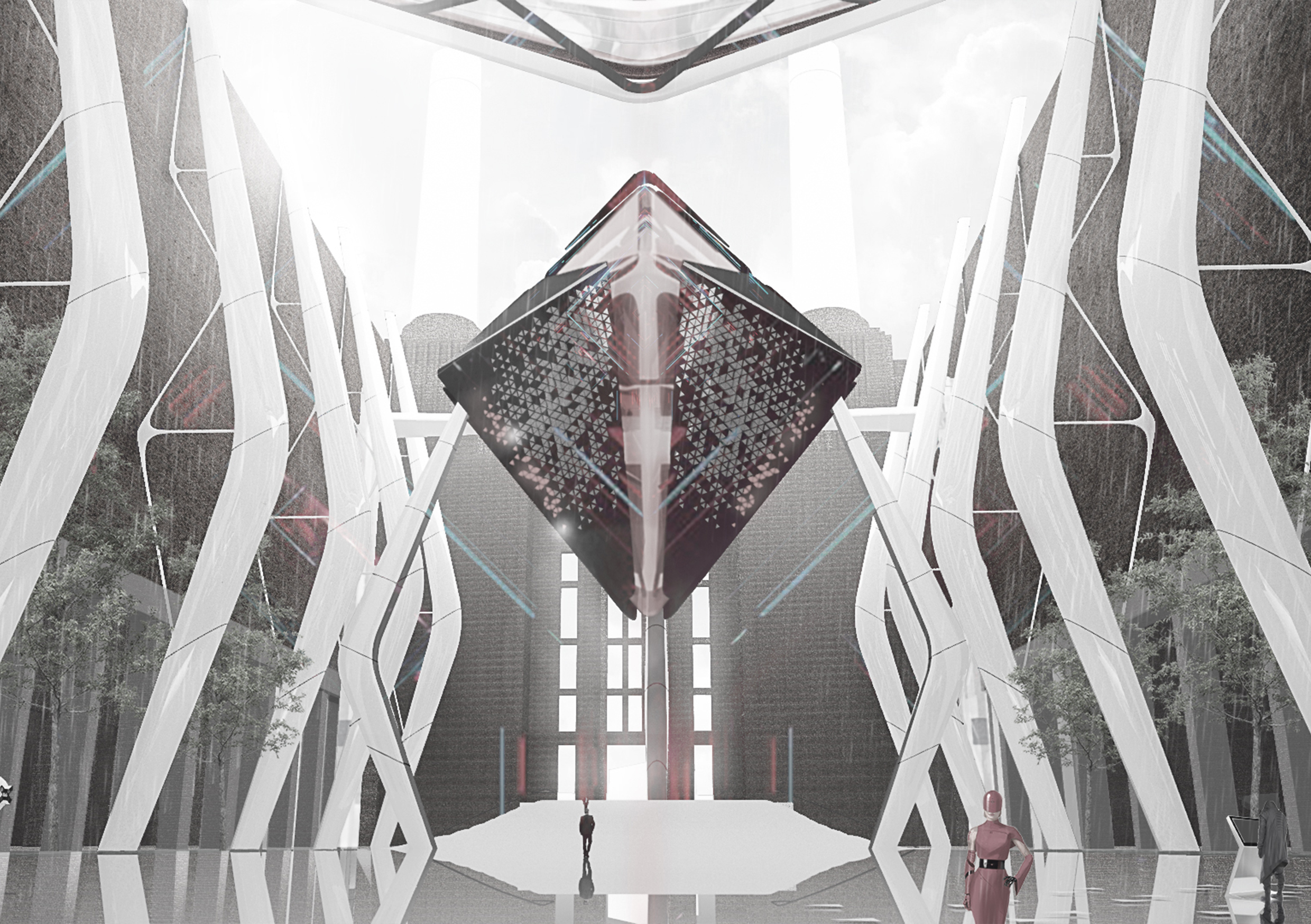
As today’s technological fields such as artificial intelligence and tech companies grow exponentially, the issue of public involvement as a decisive factor in the development of such technologies becomes urgent. The proposed project creates an interface between the public and innovation entities, laying the foundation for open-source, democratized technology. The Battersea industrial site, located south-west of London, offers the opportunity for chronological continuity, merging the character of the industrial era with that of the informational era, all within a European tech capital. The proposal envisions a technological hub that hosts the latest innovations in informational technology, artificial intelligence, digital media and industrial technologies and works with the public on improving ideas, products and policies that rule the tech and digital ecosystem. Therefore, the hub has a political function, empowering the people to decide what tomorrow should look like. Paradoxically, this physically centralized hub strives to become a symbol of a decentralized, free, self-regulating market, and is doing so by fusing it with the public element and relying on it’s contribution to accelerate the growth of ideas. The Battersea power station’s interior is also a political statement. The floating auditorium is a symbol of the intangibility of advanced technologies, yet it is open to the public, showcasing the latest iterations of artificial intelligence and other discoveries. The program requirements of the insertion are contextualized through hybridization of basic archetypes (tower block, longitudinal block, interior courtyard) and spatial navigability, emulated through digital simulations of optimal circulatory deviation networks inspired by Otto Frei’s studies and Quelea agents simulations that imitate the movement of large crowds through space. Each of the four main sections of the building features a large atrium, which marks exhibition and feedback areas on the ground floor, workshops and other forms of interaction between the public and the innovation entities on the floors above, such as startup companies on the first two floors and large, developed companies on the floors above. Therefore, the program evolves vertically, following the journey of a growing company, and encouraging informal interactions between startups, developed companies, investors, students and the general public.
Author's presentation text
Tudor Vlad-Constantin is an architect, and he started working at Farshid Moussavi Architecture in London since graduation, where he also interned while a student. He graduated at the Faculty of Architecture “G.M.Cantacuzino” at the ”Gh. Asachi” Technical University in Iași in 2019. He is registered with OAR as a trainee architect. He has participated in a number of competitions and was awarded 1st place at the IX International Festival of Architectural Civil Engineering and Design Schools of Eurasia – Diploma project competition, Uzbekistan, 2019, 1st place at XXVIII Diploma project review competition, Rivne, Ukraine, 2019 and 2nd prize at ARA 43rd Congress – Architecture project competition, Los Angeles, California, USA, 2019. He also participated in a team of two at XI C.A.S.A - Annual Architecture Students Competition, Romania, 2015, receiving honourable mention.