Eseu
WHOSE (CITY – WHOSE) REPOSNSIBILITY // battle over building
Descrierea proiectului
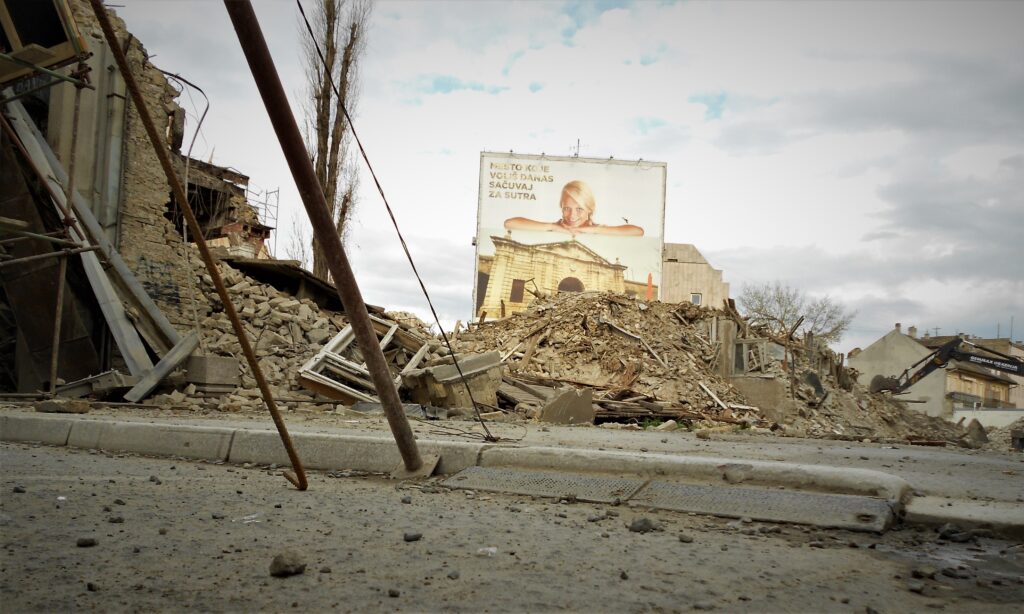
Space is important resource, and relationship towards it shows characteristics of society. We live spatial consequences of turbulent socio-political changes of ‘90s. Market economy is building with exploitative interests, violently changing identities and destroying integrity of un/built areas, resulting in chaotic urbanization, sameness, banalization of urban areas, serious threats to ecosystems and cultural monuments. The governments are officially planning, changing laws and giving public space and infrastructure as endless resource for private projects. Anybody challenging this is labeled “backward, against economic growth and development”. Decision makers that should be responsible are abusing power, causing polarized citizens to react by protesting and organizing in various in/formal groups and initiatives. This struggle for space, heritage and way of life became political, proving value of it – financial for politicians and investors, and qualitative for citizens. Despite lack of skills and time, citizens are showing concern for urban development, putting common interest above private. Sheer variety of growing CSOs, combined with readiness to support each other and exchange experiences is important resource. As Vox populi, they ask hard questions. They may not (now) save the city but are good starting point. Today we produce future heritage by construction and destruction, so preservation of un/built and prevention of mayor irreparable interventions are crucial. As citizens, activists and professionals, we take responsibility not to repeat histories of development based on (desired) future while negating heritage of the (shameful) past, or miss/using heritage to produce tradition. Questions are how to enlarge effects of civic initiatives, professional gatherings, media attention and public pressure to positively influence future? How to prove that development is not just building – but so much more.

